

[From the Athletes Soul Toolkit]:
The Identity Iceberg Exercise
Athletes often spend so much time focused on performance, results, and visible achievements that it's easy to lose sight of the deeper parts of who we are. The Identity Iceberg exercise helps you step back and reflect on the aspects of yourself that often stay hidden but matter most—your values, beliefs, strengths, and passions beyond sport.
This exercise comes from Athletes Soul's Self-Paced Course which is available to all our members on this platform.
Why This Exercise Matters:
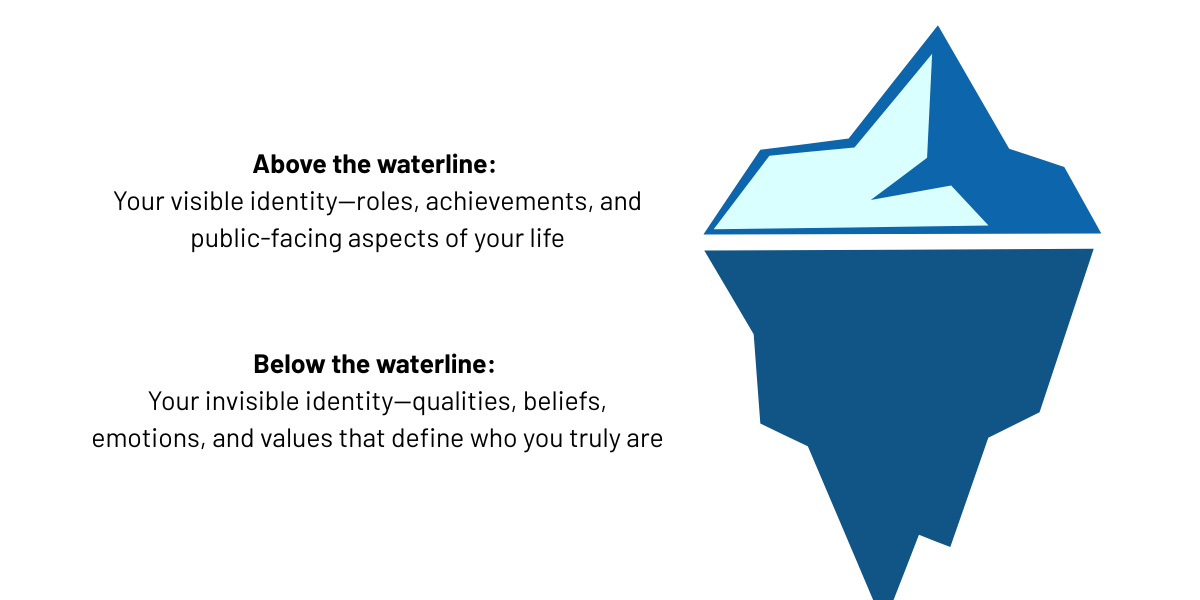
The purpose of this exercise is to separate what you do from who you are. Your visible identity—the part that others see—is important, but it's only the tip of the iceberg. Below the surface lies your invisible identity: the qualities, values, and beliefs that guide your actions, inform your decisions, and shape your character both in and out of sport. By exploring these layers, you can:
Recognize the deeper strengths that support success in sport and outside of it
Reconnect with passions, values, and qualities that make you unique
Prepare for smoother transitions when stepping away from competition
How to Do the Identity Iceberg Exercise:
Step 1: Draw Your Iceberg
Step 2: Fill In Your Iceberg
Visible Identity / "What I Do": Include your sport, position, competitions, training routines, awards, and team roles
Invisible Identity / "Who I Am": Reflect and include your personal strengths (resilience, focus, discipline), core values (integrity, growth, teamwork), beliefs, passions outside sport (music, volunteering, learning), and emotional tendencies (empathy, calm under pressure, drive)
Step 3: Reflect by asking yourself
What differences do I notice between my visible and invisible identity?
Which qualities below the waterline have helped me succeed in sport, and how could they support me beyond sport?
Are there aspects of my invisible identity I'd like to bring more into daily life?
Step 4: Take Action
Identify one or two invisible qualities you want to express more consciously
Set a small action for the week to reflect this quality
Example: If resilience is a core trait, notice opportunities to reframe challenges positively
Example: If teamwork defines you, look for ways to mentor, collaborate, or support others
You can also use colors or symbols to represent different parts of your identity
Remember:
The visible part represents your accomplishments, but the deeper qualities below the surface—your values, beliefs, strengths, and passions—are what truly support your growth, both in sport and in life. By intentionally expressing these qualities, you reinforce that your value extends far beyond medals, stats, or team roles.
Sign for our FREE athlete membership to access our Self-Paced Course and more exercises like this one.