Beyond the Labels: Afraa Mohammad’s Climb Toward Belonging
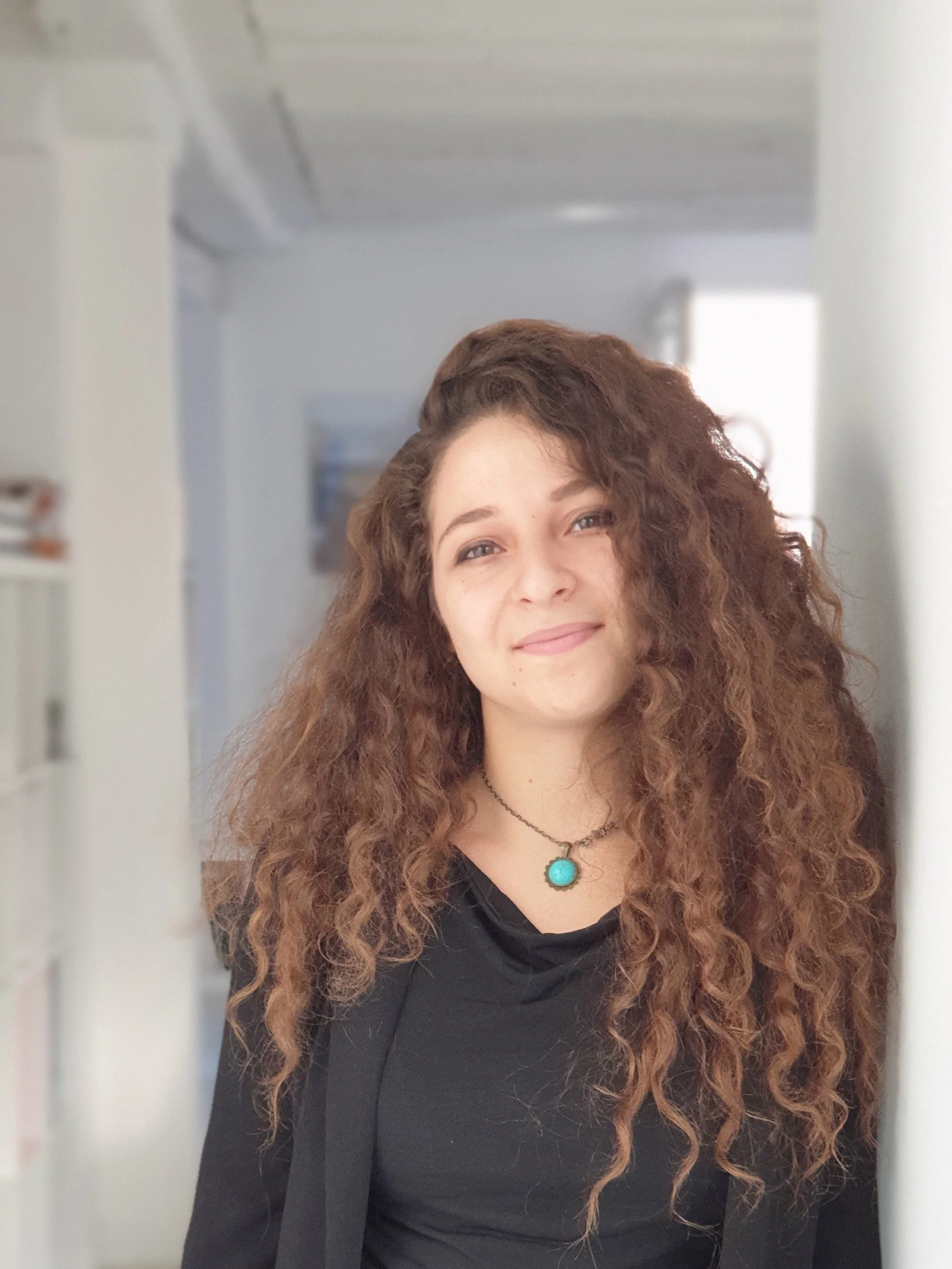
Climber. Refugee. Friend. Architect. Musician. Dancer. Writer. Afraa Mohammad is familiar with the concept of labels and the influence they can have in someone’s life. But underneath those labels and identities, Afraa has discovered the power of knowing and relying on her values. For her, those values include courage, endurance, perseverance, adaptation, empathy, and cheerfulness.
Afraa is Palestinian, was born in Syria, and is a stateless refugee. This identity has shaped much of her journey, including keeping her from pursuing a professional career in gymnastics. For years, the lack of nationality and representation made it near impossible for her to even imagine herself as a competitive athlete. After moving to France for school, however, Afraa discovered climbing and quickly fell in love with a sport that gave her both a challenge and a sense of freedom. Today, she is the first and currently only athlete on the World Climbing Refugee Team, as well as the program’s first stateless refugee athlete.
For Afraa, climbing is about far more than competition. She values the opportunity to challenge herself each time she starts a climb and the personal peace and freedom it brings her. Climbing also became an important part of how she navigated panic attacks and PTSD. “My relationship to sport has always been very personal,” she explains. “The common thread was the personal peace they brought me and the space to express myself and feel free in contexts that never offered those privileges.”
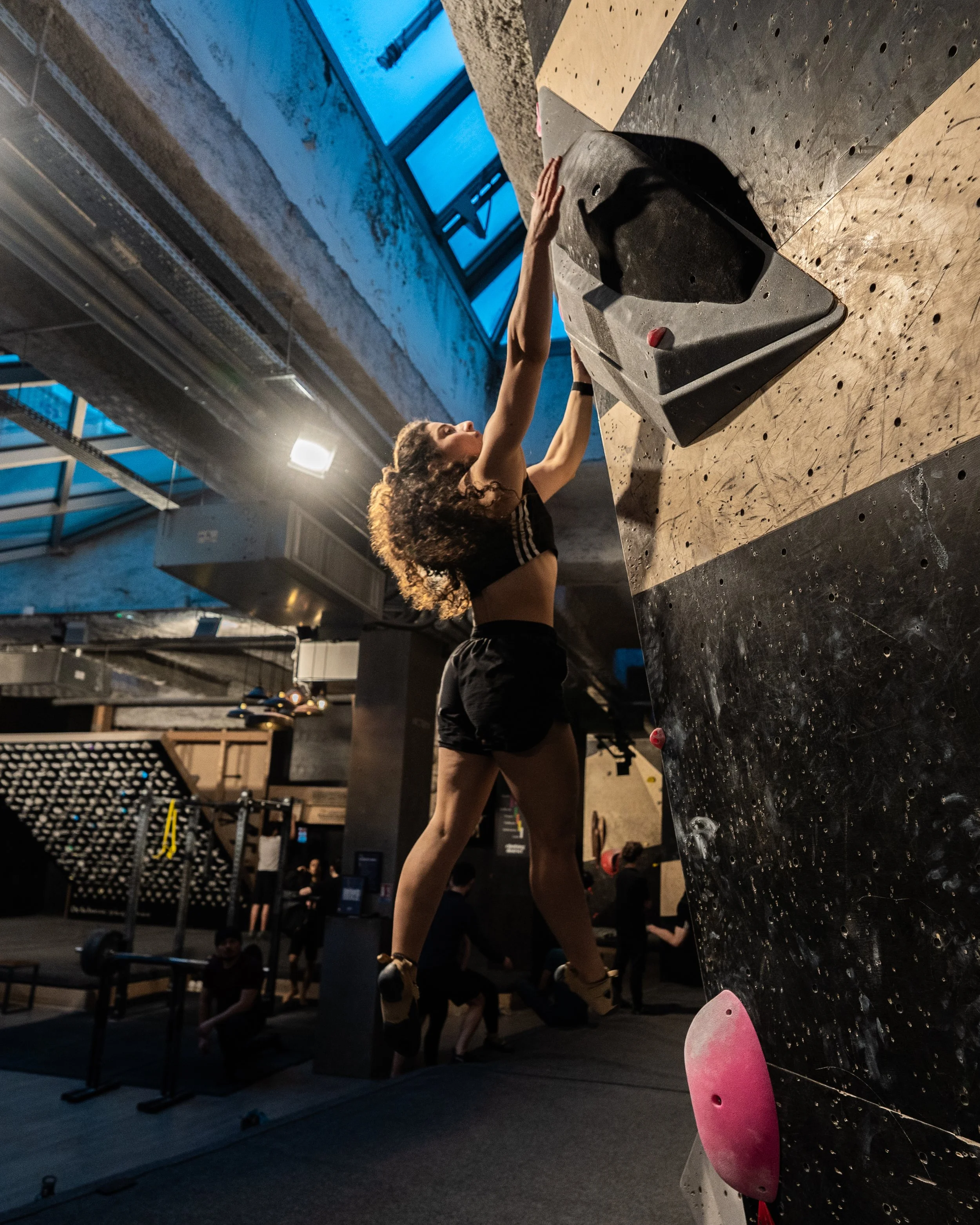
Photo Credit: Robin Dajas
Afraa was scouted by her International Federation and invited to join the World Climbing Refugee Team, creating an opportunity not only to compete at the highest level, but to represent others who may have once felt, as she did, that there was no place for them in sport. That sense of purpose has become a powerful source of motivation.
“What helps me push through is my conviction; I deeply believe in why I’m doing this: the importance of representation and paving the way for more people to join.”
After becoming the first refugee athlete in her sport, she encountered another set of barriers. She does not have a traditional training center, coach, team, or medical personnel. Instead, she has had to build a network of people willing to support her journey. With support from the Olympic Refugee Foundation and her international federation, she has been able to compete and travel more easily, but she recognizes that there is still significant work to be done to create systems prepared to support refugee athletes.
One of the most significant moments of Afraa’s career came when she competed in her first official competition, the European Championships, in July 2026. After a lifetime of being unable to participate in competitive sports because of her lack of nationality, simply stepping onto that international stage represented something much bigger than a competition.
It also brought a new challenge: navigating the weight of everything Afraa represents. As the first and only athlete on the World Climbing Refugee Team, she is not simply competing as Afraa.
I’m not competing as myself, I’m competing as the refugee, the stateless, the Palestinian, the Syrian, whatever you want, the first climber refugee. There are a lot of labels that come with the status, and at some point I had a very hard time navigating this new identity I was given, because I stopped feeling like I was myself.
This was one of the areas where Athletes’ Soul became particularly meaningful for Afraa. She was referred to Athletes’ Soul by another member of the Olympic Refugee Foundation/Olympic Committee Foundation. Through the Group Coaching Program, she was able to learn from athletes who had already experienced many of the challenges she was beginning to encounter.
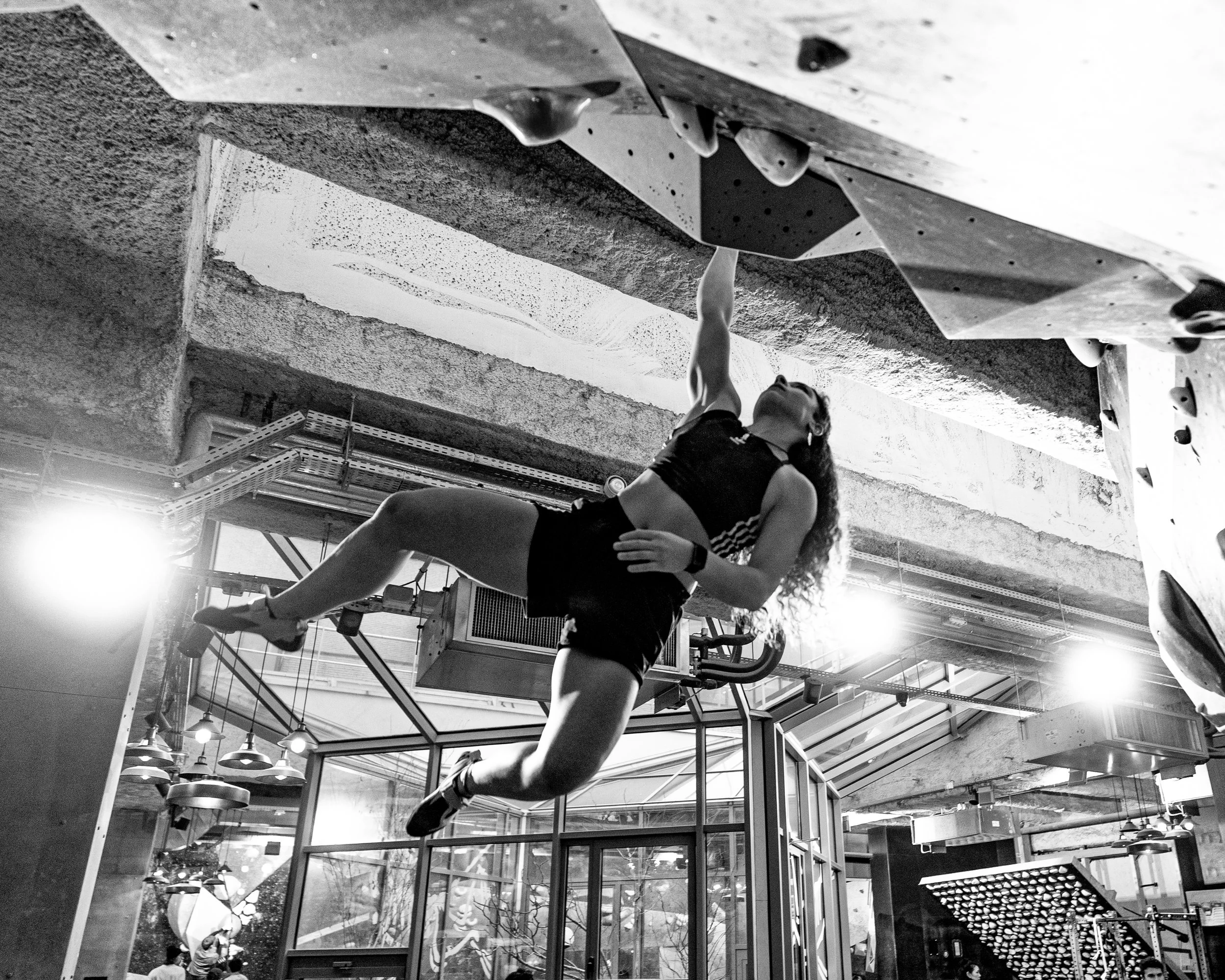
Photo Credit: Robin Dajas
One of the most meaningful parts of the program was exploring the distinction between who you are and what you do. For Afraa, that exercise took on a deeper meaning because her athletic identity is intertwined with the many identities she represents. Group coaching helped her reconnect with the person underneath those labels. At her first international competition, she brought a piece of paper with her containing an identity exercise she had completed through Athletes’ Soul. When the pressure of competition and representing refugee athletes became overwhelming, she used it as a grounding tool.
“I just started reminding myself of my personal value outside of sport, which suddenly takes out a lot of…the pressure. And I think that is something that I will definitely be doing every single time.”
Afraa also valued the diversity of perspectives within the Group Coaching Program. She learned alongside athletes younger and older than herself, including people at very different stages of their athletic journeys. “It makes it a very rich experience.” She continues to stay in touch with some of the athletes she met through the program and appreciated seeing how different lessons and tools could benefit athletes at different points in their careers.
For Afraa, Athletes’ Soul is not only for athletes who are retiring or preparing to leave sport. “It gave me a look into the future, and these are the questions that I’m going to ask myself as I go through this journey.”
She has also recently begun one-on-one mentoring, where she appreciates the personal approach and the opportunity to dive more deeply into what she is experiencing, ask questions, and work toward her individual goals in a practical way. For athletes considering Athletes’ Soul, her message is simple: “Do it!” She describes the program as a safe space where athletes can talk about everything without feeling judged, while taking away something different depending on what they need.
Now, Afraa is preparing for the biggest challenge of her career: the 2027 season, which will ultimately determine whether she qualifies for the 2028 Olympic Games in Los Angeles. As she looks ahead, she carries with her a message for other athletes navigating the pressures of sport:
Know the reason you're doing it. And the second thing is, your value is not your sports result.
Her own journey may not be linear. “There have been more downs than ups,” she says. “But the sports world is one world where we can—and should—all have the right to exist.” For Afraa, that belief is more than a personal philosophy. It is part of what drives her forward. She is competing not only for herself, but to make space for those who come after her. “I want to show the importance of giving the support and tools for refugees to be athletes. If I’m able to do this in my mid-twenties within four years of discovering my sport, imagine what a refugee kid could do if they were integrated and allowed to train at the appropriate age. So my dream is not only to inspire other refugees to become athletes, but also to encourage institutions to adapt their structures to welcome them.” And while she continues to navigate what it means to be a refugee, a stateless person, a Palestinian, a Syrian, and a professional athlete, she is also learning that none of those labels can fully define her.
Afraa’s journey is about more than becoming an athlete. It is about challenging the idea of who gets to belong in sport—and creating space for those who have never seen themselves represented there before. She is climbing for herself, but she is also paving a path for others, proving that nationality, circumstance, or the labels placed upon us do not have to determine what is possible. As she looks toward the 2027 season and the possibility of the Olympic Games, Afraa continues to carry her values of courage, perseverance, adaptation, and empathy with her. Her story is a reminder that sometimes, the most powerful way to change a sport is simply to show up and claim your place in it.